
Can strong project results shape Europe’s industrial transition if they remain fragmented or unseen?
This question guided EEIP’s contribution to the IS2H4C General Assembly, held on 24-25 February 2026 at Industriepark Höchst and hosted by Infraserv. Bringing together partners from across Europe, the meeting marked an important milestone for the project as it entered its second half and shifted focus from planning and development towards integration, implementation and impact.
The IS2H4C Gneral Assembly provided an opportunity to assess progress across the project’s four Hubs for Circularity located in the Netherlands, Germany, Spain and Türkiye, while identifying the actions needed to maximise collaboration and scalability in the years ahead.
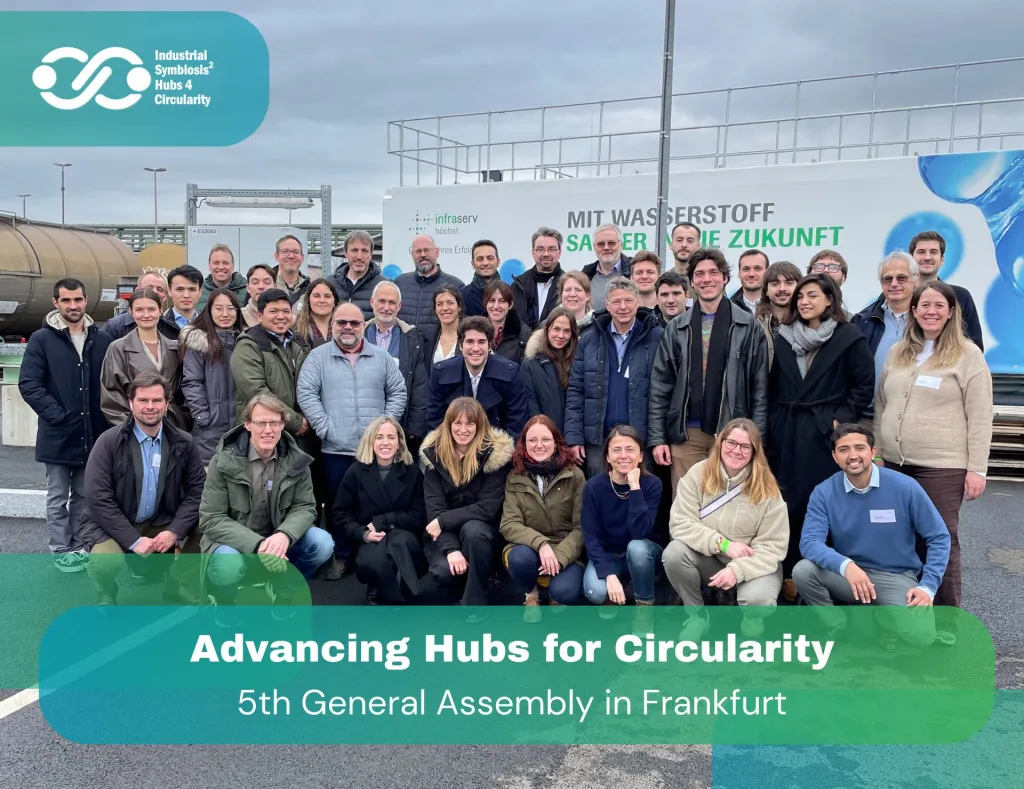
A Working Assembly Focused on Implementation
The General Assembly combined project updates with interactive workshops designed to address ongoing challenges and align partners around common objectives.
Discussions focused on several key areas:
- Integration and demonstration of technologies in real industrial environments
- Development of governance and social innovation frameworks
- Refinement of business and financial models supporting industrial symbiosis
- Modelling trust as a driver for cooperation and investment
- Advancement of Digital Twins and the Digital Collaboration Platform
- AI governance and environmental ethics considerations
Across all sessions, participants reinforced a shared understanding that circular industry cannot be achieved through technology alone. Success depends on the alignment of technical innovation, economic viability, stakeholder engagement and policy frameworks.
From Project Activities to European Impact
As leader of Work Package 8 on communication, dissemination and exploitation, EEIP facilitated a dedicated workshop exploring how project activities can generate visibility and influence beyond the consortium itself.
The discussion focused on connecting local hub activities with broader European narratives and ensuring that project achievements reach policymakers, industrial stakeholders and replication regions. Participants examined how communication can strengthen project impact by creating coherent messages across different audiences and levels of engagement.
A key conclusion emerged: every activity undertaken within the project contributes to the collective positioning of IS2H4C. Effective communication is therefore not a separate task but an essential component of successful project implementation.
Why Communication Matters for Circular Industry
Industrial transformation requires more than innovative technologies and business models. It also requires visibility, understanding and adoption.
Without effective communication, valuable lessons learned within projects risk remaining isolated from the organisations and decision-makers that could benefit from them. By translating technical progress into accessible and actionable insights, communication helps ensure that successful approaches can be replicated and scaled across Europe.
For a project as ambitious as IS2H4C, this means creating strong links between project activities, stakeholder engagement and policy discussions. Building these connections supports wider uptake of circular solutions and strengthens Europe’s transition towards a more resource-efficient industrial system.
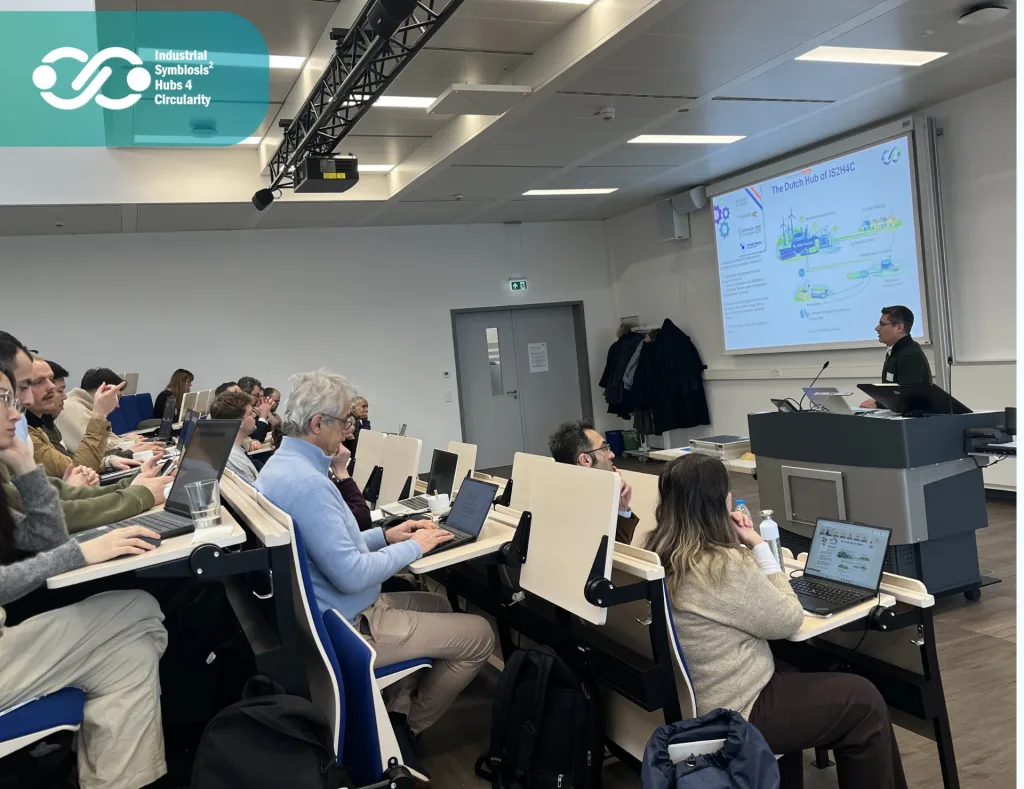
Supporting Europe’s Hubs for Circularity
The IS2H4C project is developing and demonstrating innovative approaches to industrial symbiosis and circular economy collaboration through four large-scale Hubs for Circularity. These hubs serve as real-world environments where companies, regions and stakeholders can test new models for resource sharing, collaboration and sustainable industrial development.
The progress discussed during the IS2H4C General Assembly demonstrated growing maturity across all work areas and highlighted the importance of continued cooperation between technical, business and communication teams.
Next Steps for IS2H4C
As the project moves further into its implementation phase, attention will increasingly focus on consolidating results, strengthening integration between activities and preparing successful solutions for wider replication.
EEIP will continue supporting these efforts by helping ensure that project achievements reach the audiences capable of transforming project outcomes into lasting impact across Europe.
We thank Infraserv for hosting the General Assembly and all consortium partners for their constructive contributions and commitment to advancing Europe’s circular industry transition.
Learn More About IS2H4C
To discover the project’s Hubs for Circularity, industrial symbiosis initiatives and latest developments, visit the official project website!
IS2H4C (Industrial Symbiosis to Hubs for Circularity) is funded by the European Union under Horizon Europe Grant Agreement No. 101138473.
Views and opinions expressed are however those of the author(s) only and do not necessarily reflect those of the European Union or the European Commission. Neither the European Union nor the granting authority can be held responsible for them.
