
Hubs for Circularity are emerging as one of Europe’s most important approaches to accelerating industrial decarbonisation, resource efficiency and cross-sector collaboration. Bringing together industries, infrastructure, public authorities and local stakeholders, these hubs aim to transform industrial areas into connected ecosystems where resources, energy and knowledge are shared more effectively.
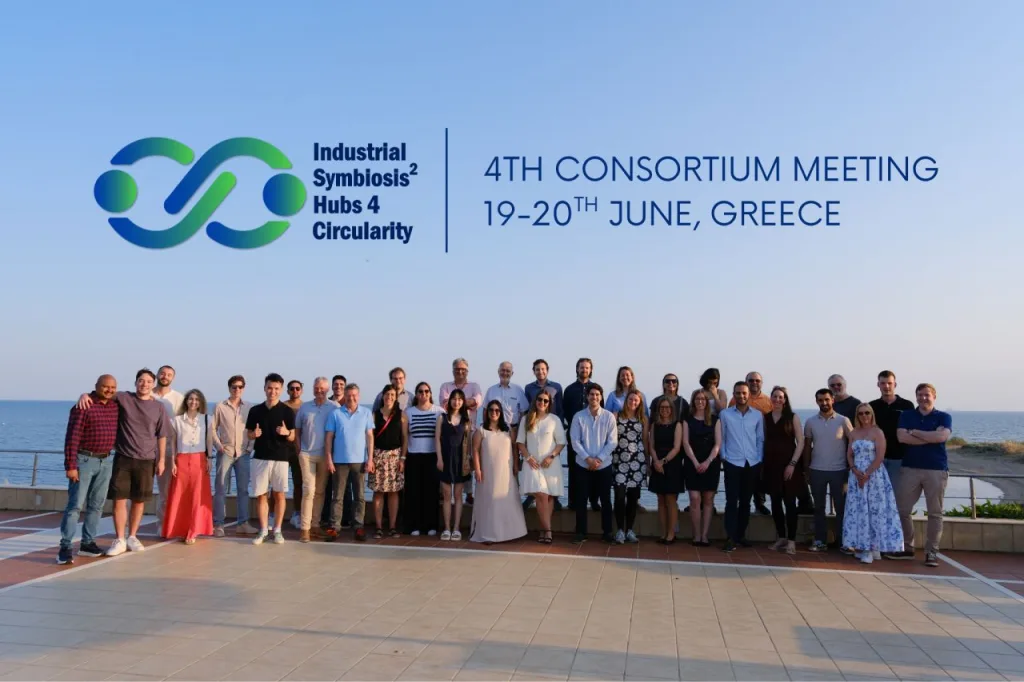
Against this backdrop, partners in the Horizon Europe IS2H4C project gathered for the 4th Consortium Meeting and project review in June 2025. The meeting provided an opportunity to assess technical progress, review achievements with the European Commission and coordinate the next phase of work across the project’s four demonstration hubs.
Advancing Europe’s Hubs for Circularity
The consortium meeting focused on the progress made in developing Hubs for Circularity (H4Cs) across the project’s pilot regions in the Netherlands, Germany, Spain and Türkiye.
Partners presented updates from the demonstration sites, highlighting advances in industrial symbiosis, circular business models, governance approaches and digital tools that support collaboration between industrial actors. Discussions also examined how technical, economic and social dimensions can be integrated to create industrial ecosystems that are more resilient, resource-efficient and prepared for the transition to climate neutrality.
The project review with the European Commission provided an opportunity to demonstrate how IS2H4C is progressing towards its objective of scaling industrial symbiosis into fully integrated Hubs for Circularity capable of delivering environmental, economic and societal benefits.
Communicating Innovation Beyond the Consortium
Developing innovative solutions is only one part of a successful Horizon Europe project. Ensuring that knowledge reaches the organisations capable of applying it is equally important.
As the leader of Work Package 8 on Communication, Dissemination and Exploitation, EEIP presented the progress made in strengthening the project’s visibility and stakeholder engagement. Activities include managing the IS2H4C website, coordinating communication campaigns, supporting partner dissemination activities and promoting project achievements through events, publications and collaboration with other European initiatives.
The consortium meeting also provided an opportunity to discuss upcoming communication priorities, ensuring that future project results continue reaching industry, policymakers, researchers and regional stakeholders interested in developing Hubs for Circularity across Europe.
Building Momentum for Industrial Circularity
As IS2H4C moves forward, collaboration between partners remains essential for transforming research, pilot activities and regional experience into practical models that can be replicated elsewhere.
The meeting reinforced the importance of aligning technical developments with communication, stakeholder engagement and exploitation activities to maximise the project’s long-term impact. By connecting demonstration results with wider European discussions on industrial decarbonisation and circular economy policies, the consortium is helping create the conditions needed for broader adoption of the Hubs for Circularity concept.
Through its leadership in communication and dissemination, EEIP continues supporting this process by helping project knowledge reach the audiences that can translate research into practical implementation and future collaboration.
Learn More About IS2H4C
IS2H4C (Sustainable Circular Economy Transition: From Industrial Symbiosis to Hubs for Circularity) is developing innovative approaches that help industrial regions become more circular, collaborative and resource-efficient through integrated Hubs for Circularity.
Discover the latest project news, demonstration activities and results on the official project website:
Funding Acknowledgement
This project has received funding from the European Union’s Horizon Europe research and innovation programme under Grant Agreement No. 101138473.
Views and opinions expressed are however those of the author(s) only and do not necessarily reflect those of the European Union or the granting authority. Neither the European Union nor the granting authority can be held responsible for them.
