
How can carbon capture technologies help Europe’s industries remain competitive while reducing emissions? This question was at the heart of the first public dissemination workshop organised by the CAPTUS project, bringing together policymakers, researchers, industry representatives and European project partners to discuss one of the most important challenges facing industrial decarbonisation.
Held on 18 June 2024 and organised by EEIP, the online workshop, Unlocking the Potential of Carbon Capture Technology for an Eco-Industrial Evolution, welcomed around 100 participants from across Europe. The event provided a platform to exchange knowledge, showcase European innovation and explore how carbon capture and utilisation (CCU) technologies can support the transition towards more sustainable industrial production.
Bringing European Expertise Together
Successfully deploying carbon capture technologies requires collaboration across research, industry and policymaking. The workshop reflected this by bringing together speakers representing European institutions, Horizon-funded innovation projects and organisations working at the forefront of industrial decarbonisation.
The event opened with a keynote address from Konstantina Plakaki of the Hellenic Ministry of Environment and Energy, highlighting the growing importance of carbon capture technologies within Europe’s climate and industrial policies.
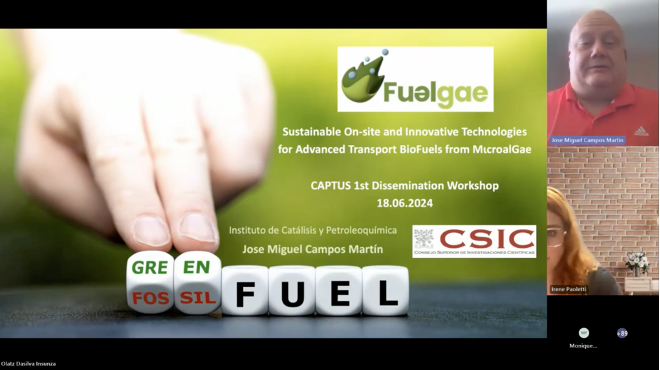
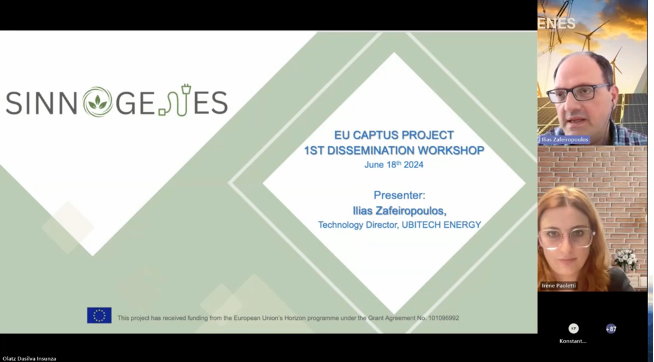
Participants also heard from two complementary European research projects, Fuelgae and SINNOGENES, which presented their work on carbon dioxide utilisation and renewable energy solutions. Their presentations demonstrated how collaboration between European projects can accelerate innovation by sharing knowledge, experiences and practical solutions.
Exploring the Challenges of Industrial Carbon Capture
While carbon capture technologies continue to advance, large-scale deployment still presents technical, economic and regulatory challenges.
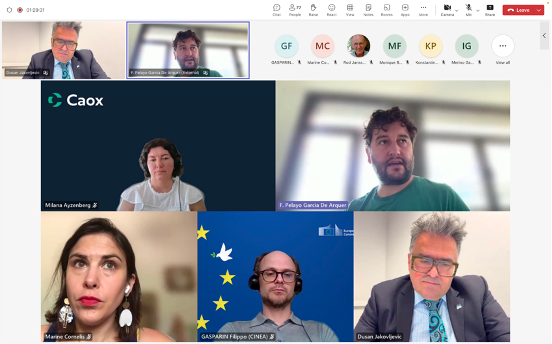
These topics formed the basis of a panel discussion moderated by Dušan Jakovljević, Policy and Communication Director at EEIP. The discussion brought together experts from research, industry, civil society and European institutions to explore how Carbon Capture and Utilisation technologies can be integrated into existing industrial processes.
Panel members discussed issues including technology readiness, investment challenges, policy frameworks and public acceptance, while also highlighting the opportunities that carbon capture offers for reducing emissions from sectors where complete electrification remains difficult.
The exchange demonstrated that achieving industrial decarbonisation requires not only technological innovation but also strong cooperation between policymakers, businesses, researchers and citizens.
Interactive Communication Beyond Traditional Dissemination
As organiser of the workshop, EEIP designed the event to encourage active participation rather than one-way communication.
Alongside presentations and discussions, participants took part in an interactive quiz that introduced the objectives of the CAPTUS project while collecting valuable feedback from attendees. This interactive approach encouraged participants to engage more directly with the project’s themes and demonstrated how innovative communication methods can improve knowledge sharing within European research projects.
For EEIP, creating opportunities for dialogue is an essential part of successful dissemination. Workshops such as this help transform research results into conversations that involve the wider community of stakeholders working towards Europe’s climate objectives.
Building Momentum for Future Collaboration
One of the strongest messages emerging from the workshop was the importance of collaboration.
Representatives from industry, academia, research organisations and public authorities exchanged experiences on integrating carbon capture solutions into existing industrial systems while sharing examples from ongoing pilot projects across Europe.
These discussions illustrated how cross-sector partnerships help overcome technical and economic barriers by combining complementary expertise and accelerating the development of practical solutions.
The workshop also strengthened links between European research initiatives working on related technologies, creating new opportunities for knowledge exchange beyond the CAPTUS consortium itself.
Looking Ahead
The dissemination workshop marked the beginning of a wider stakeholder engagement programme that will continue throughout the CAPTUS project.
Building on the success of the event, EEIP will continue organising communication and dissemination activities that connect researchers, industry, policymakers and citizens around the future of carbon capture technologies. Future workshops, knowledge-sharing activities and collaborative events will help ensure that the project’s results reach the audiences capable of supporting their wider adoption.
For those unable to attend the live event, a recording of the workshop is available below.
Funding Acknowledgement
Co-funded by the European Union Horizon Europe Research and Innovation Program under Grant Agreement No. 101118265. Views and opinions expressed are however those of the author(s) only and do not necessarily reflect those of the European Union or the European Climate, Infrastructure and Environment Executive Agency (CINEA). Neither the European Union nor CINEA can be held responsible for them.
