
How can Europe’s industries and SMEs accelerate the transition towards climate neutrality while remaining competitive? This question brought together experts, policymakers and European innovation projects during a dedicated session at the European Sustainable Energy Week (EUSEW) 2024, held online on 11 June 2024.
Titled Paving the Way to Net-Zero Energy in Industry and SMEs, the session explored practical approaches to improving energy efficiency, supporting industrial decarbonisation and helping small and medium-sized enterprises overcome the barriers to adopting clean energy solutions.
Representing the DEESME2050 project, EEIP contributed both as a project partner and as moderator of the event’s expert panel, helping facilitate dialogue between European projects, industry specialists and policymakers working towards a more sustainable industrial future.

Showcasing European Solutions for Energy Efficiency
The session brought together six Horizon-funded projects working to improve energy efficiency across industry and SMEs:
- EnTRAINER
- AUDIT2MEASURE
- DEESME2050
- EE4SMEs
- EE4HORECA
- KNOWnNEBs
Although each project addresses different sectors and challenges, all share a common objective: helping businesses reduce energy consumption, lower emissions and strengthen competitiveness through practical, scalable solutions.
Together, the projects demonstrated how European collaboration is accelerating the development of tools, methodologies and policy recommendations that support the transition towards net-zero industry.
For DEESME2050, the session provided an opportunity to present its work supporting SMEs in identifying and implementing energy efficiency improvements while encouraging long-term organisational change and stronger energy management practices.
Why SMEs Are Central to Europe’s Energy Transition
Small and medium-sized enterprises make up the vast majority of European businesses, yet many continue to face significant obstacles when investing in energy efficiency.
Limited financial resources, lack of technical expertise and uncertainty around available technologies often delay the implementation of energy-saving measures, even when clear economic benefits exist.
Throughout the discussion, speakers highlighted the importance of targeted support mechanisms that help SMEs move from identifying opportunities to implementing concrete actions. Financial incentives, practical guidance and collaboration between businesses, policymakers and support organisations were identified as essential ingredients for accelerating industrial decarbonisation.
The exchange reinforced the idea that improving energy efficiency is not only an environmental objective but also a way to strengthen competitiveness, reduce operating costs and improve long-term business resilience.
EEIP Moderates the Expert Discussion
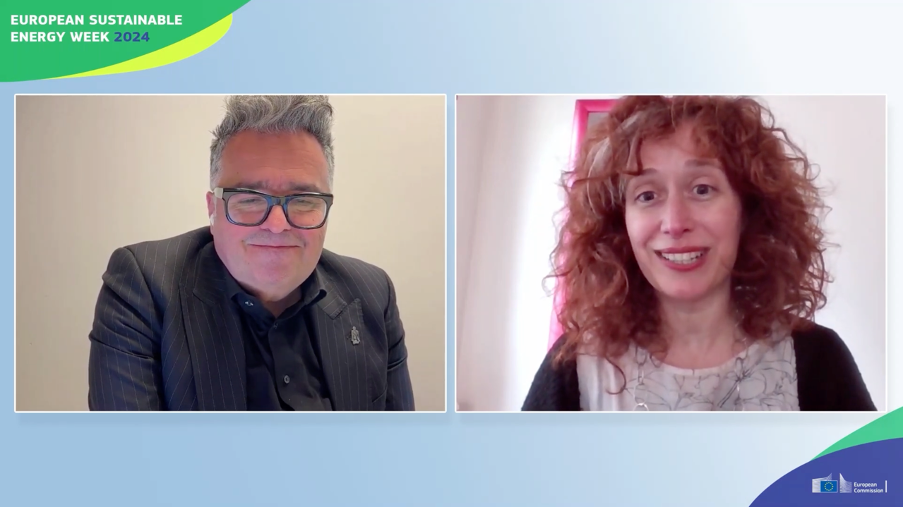
The event concluded with an interactive roundtable moderated by Dušan Jakovljević, Policy and Communication Director at EEIP.
Building on the presentations and audience questions, the discussion explored some of the most pressing issues facing Europe’s industrial energy transition, including financing mechanisms, policy frameworks, energy efficiency implementation and the broader benefits of industrial decarbonisation.
Joining the panel were Eline Blanchard, Edyta Nowak and Ettore Piantoni, who brought complementary expertise in industrial energy efficiency, funding instruments and the wider economic benefits of energy-saving investments.
Rather than focusing solely on technological innovation, the conversation examined how policy, financing and knowledge sharing can work together to accelerate the adoption of energy-efficient solutions across Europe’s industrial landscape.
Digitalisation as an Enabler of Energy Efficiency
Another important theme throughout the session was the growing role of digital technologies in supporting energy management.
Speakers discussed how digital monitoring systems, advanced data analytics and process optimisation tools are helping companies better understand their energy consumption and identify opportunities for improvement.
These technologies allow businesses to make more informed operational decisions, improve process efficiency and reduce both costs and emissions. Combined with organisational changes and targeted investments, digitalisation is becoming an increasingly important driver of Europe’s industrial transition.
For many SMEs, digital tools also provide greater visibility over energy performance, helping organisations prioritise investments and measure the impact of implemented efficiency measures.
Looking Beyond the Event
While the EUSEW session marked a valuable opportunity to exchange knowledge between projects, its impact extends beyond a single discussion.
The experiences shared by participating projects contribute to wider European policy discussions on industrial decarbonisation, energy efficiency and support mechanisms for SMEs. They also help identify common challenges that future European initiatives can address through research, innovation and collaboration.
For EEIP, moderating discussions such as this forms part of a broader commitment to connecting European innovation with the stakeholders who can turn research into practical action. By facilitating dialogue between projects, industry and policymakers, EEIP helps ensure that valuable knowledge reaches the organisations working to deliver Europe’s clean energy transition.
A recording of the full session is available for anyone wishing to explore the discussions and presentations in more detail.
Funding Acknowledgement
Co-funded by the European Union under Project n°101076386. Views and opinions expressed are however those of the author(s) only and do not necessarily reflect those of the European Union or CINEA. Neither the European Union nor the granting authority can be held responsible for them.
