
The DMaaST consortium gathered in Ljubljana, Slovenia, on 26-27 February 2025 for its latest project meeting, hosted by Trace Labs. Bringing together partners from across Europe, the meeting marked an important milestone as the project moves from its initial setup phase into full technical implementation.
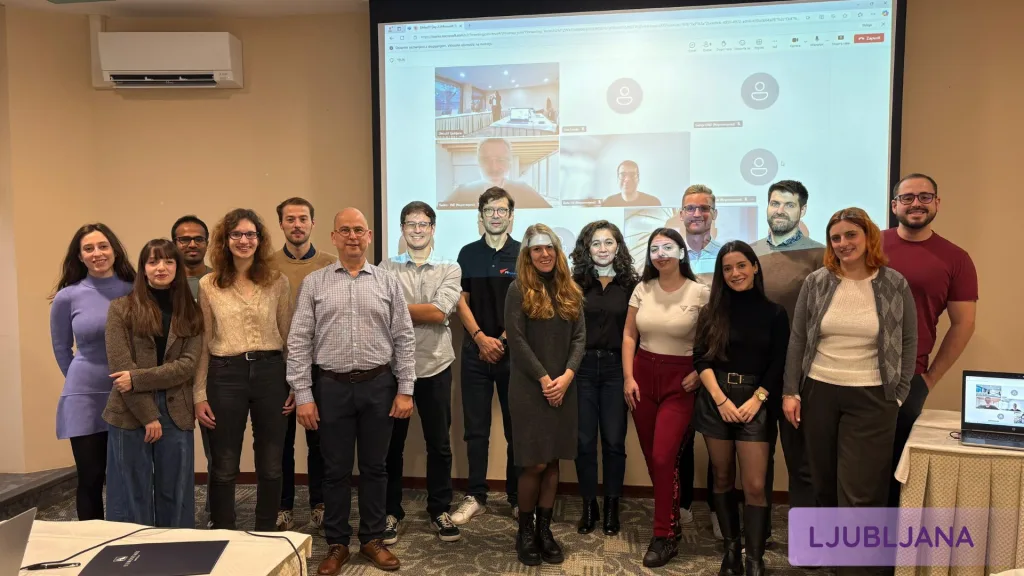
Over two days, consortium members reviewed progress achieved during the project’s first months, aligned technical activities and prepared the next development steps that will contribute to creating more resilient, adaptive and data-driven manufacturing systems.
Aligning the Building Blocks of DMaaST
As the project progresses, ensuring that individual technical developments evolve as one integrated solution is essential.
The meeting focused on strengthening collaboration across work packages, reviewing methodological approaches and confirming how each technical activity contributes to the wider objectives of DMaaST. Discussions covered system architecture, use-case preparation, interoperability and the coordination required to ensure that different project components evolve together.
Rather than developing isolated technologies, the consortium continues working towards an integrated digital manufacturing ecosystem capable of improving flexibility, resilience and operational efficiency within industrial production.
Partners also examined the interfaces between different technical developments, identifying key dependencies and agreeing on priorities for the coming months to ensure smooth project integration.
EEIP Supporting Communication and Dissemination
As a task leader within the Communication and Dissemination Work Package, EEIP contributed to discussions on how the project’s progress should be communicated to external audiences throughout its development.
Effective communication plays an important role in ensuring that innovative research reaches industry, policymakers and other stakeholders while accurately reflecting the maturity of the technologies being developed.
During the meeting, EEIP worked with consortium partners to align communication activities with the project’s technical progress, ensuring that future dissemination materials clearly present DMaaST’s objectives, achievements and expected impact without overstating results at this early stage.
The discussions also explored opportunities for early stakeholder engagement and future outreach activities that will help build awareness of the project as technical developments continue.
Strengthening Collaboration Across the Consortium
Beyond reviewing technical progress, the meeting reinforced the collaborative approach that underpins the DMaaST project.
Partners confirmed priorities for the next implementation phase, agreed on coordination mechanisms for upcoming activities and discussed how continued collaboration across disciplines will support the successful delivery of project objectives.
Bringing together experts in digital technologies, manufacturing, data management and communication enables the consortium to address complex industrial challenges through a coordinated European approach.
Alongside the technical sessions, partners also took part in a team-building activity that strengthened relationships across the consortium and supported effective collaboration for the next stages of the project.
Looking Ahead
With the project now firmly entering its implementation phase, the consortium will continue developing and validating the technologies that underpin DMaaST’s vision for smarter and more adaptive manufacturing.
EEIP will continue supporting the project through communication, dissemination and stakeholder engagement activities, helping ensure that project developments reach relevant industrial communities and contribute to Europe’s digital and sustainable industrial transition.
As technical work progresses, the consortium remains committed to delivering practical solutions that strengthen the resilience, flexibility and competitiveness of European manufacturing.
Learn more about the project latest activities at dmaast.eu
Funding Acknowledgement
Funded by the European Union’s Horizon Europe research and innovation programme under Grant Agreement No. 101138648.
Views and opinions expressed are however those of the author(s) only and do not necessarily reflect those of the European Union or the European Health and Digital Executive Agency (HADEA). Neither the European Union nor HADEA can be held responsible for them.
