
Every European research project aims to leave something behind that extends beyond its funding period. For the Horizon Europe project STORMING, that legacy is a body of knowledge advancing CO₂-free hydrogen production through methane cracking technologies that have the potential to support Europe’s industrial decarbonisation ambitions.
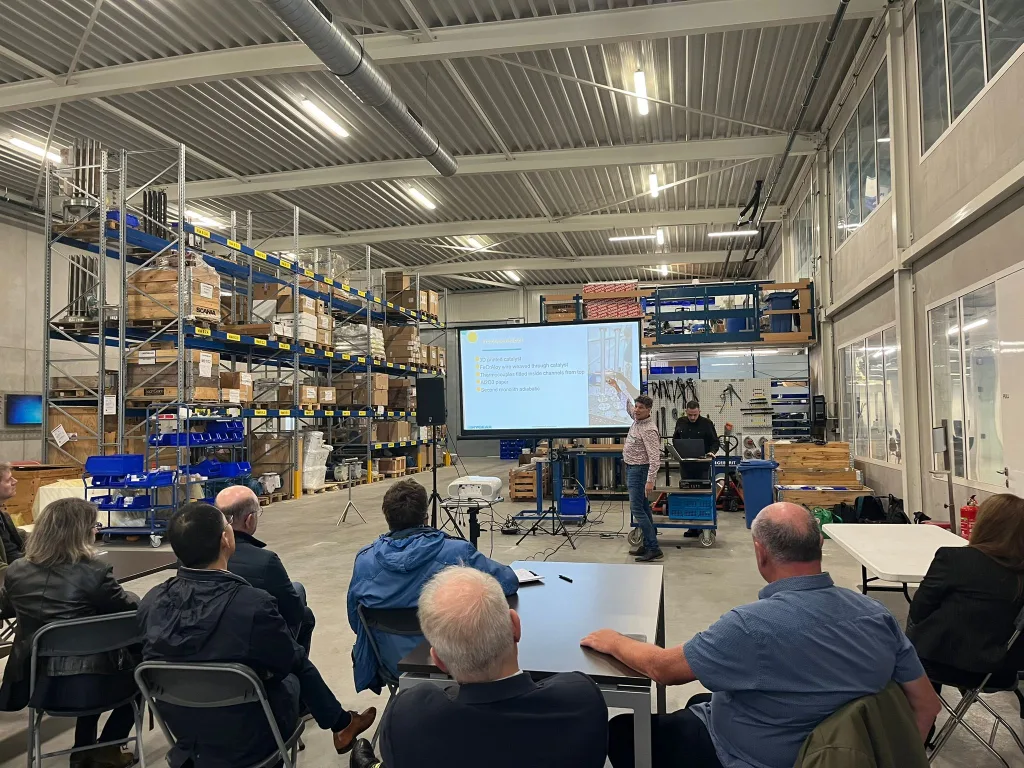
The STORMING final event brought together project partners, researchers, industrial stakeholders and members of the wider hydrogen community to present the project’s achievements and reflect on the next steps for this emerging technology. Rather than simply marking the end of the project, the event demonstrated how collaborative European research can lay the foundations for future innovation.
Turning an Ambitious Concept into Demonstrated Results
When STORMING began, its objective was to investigate whether methane cracking could offer a viable alternative to conventional hydrogen production methods.
Unlike steam methane reforming, which produces significant carbon dioxide emissions, methane cracking separates methane into hydrogen and solid carbon without generating direct CO₂ emissions during the reaction itself. This creates opportunities not only for cleaner hydrogen production but also for the recovery of valuable carbon materials that can be reused in industrial applications.
Throughout the project, the consortium developed and validated innovative reactor concepts, investigated advanced catalyst materials and optimised operating conditions capable of supporting efficient hydrogen production. The final event presented these achievements alongside the technical lessons learned during four years of collaborative research.
The presentations illustrated how STORMING has progressed from scientific investigation towards technologies with genuine industrial relevance, while also identifying the challenges that remain before large-scale deployment becomes possible.
From Scientific Results to Industrial Dialogue
The event was designed not only to present research findings but also to encourage discussion between scientists, technology developers, industrial stakeholders and policymakers.
Topics included reactor performance, catalyst development, system integration and the potential role of methane cracking within Europe’s future hydrogen economy. Speakers also explored questions surrounding scalability, market readiness and the contribution that innovative hydrogen technologies can make towards achieving Europe’s climate neutrality objectives.
By opening these discussions beyond the consortium, the final event reinforced one of the central principles of Horizon Europe: ensuring that publicly funded research generates knowledge that can inform future innovation, investment and policy development.
Communicating Research Beyond the Project
Innovative technologies only create lasting impact when the knowledge behind them reaches the organisations capable of developing, applying and investing in them.
Throughout STORMING, EEIP led the project’s communication, dissemination and stakeholder engagement activities, working alongside consortium partners to ensure that research outcomes reached audiences beyond the technical community. News articles, interviews, webinars, conference participation, educational content and digital communication all contributed to increasing the visibility of the project’s work during its lifetime.
The final event represented the culmination of these efforts, bringing together technical achievements, stakeholder dialogue and project communication in a single forum that highlighted both the scientific progress made and its wider relevance for European industry.
As the project concludes, EEIP will continue supporting the visibility of STORMING’s outcomes by sharing its results across industrial and policy networks, helping ensure that the knowledge generated continues to contribute to future discussions on hydrogen innovation and industrial decarbonisation.
A Strong Foundation for Future Hydrogen Technologies
Although the research activities have now concluded, STORMING leaves behind more than technical results.
The project has strengthened European expertise in methane cracking technologies, generated valuable scientific knowledge and demonstrated the importance of collaboration between research organisations, industry and communication partners. These achievements provide a solid foundation for future projects seeking to advance clean hydrogen production and reduce emissions from energy-intensive industries.
As Europe continues investing in a competitive hydrogen economy, projects such as STORMING demonstrate how collaborative research can accelerate technological innovation while supporting long-term energy security, industrial competitiveness and climate objectives.
Discover the STORMING Project
STORMING developed innovative methane cracking technologies capable of producing CO₂-free hydrogen and valuable solid carbon, contributing to cleaner industrial processes and the future hydrogen economy.
Explore the project’s technologies, publications and final results on the official website: storming-project.eu
Funding Acknowledgement
This project has received funding from the European Union’s Horizon Europe research and innovation programme under Grant Agreement No. 101069690.
Views and opinions expressed are however those of the author(s) only and do not necessarily reflect those of the European Union or the granting authority. Neither the European Union nor the granting authority can be held responsible for them.
